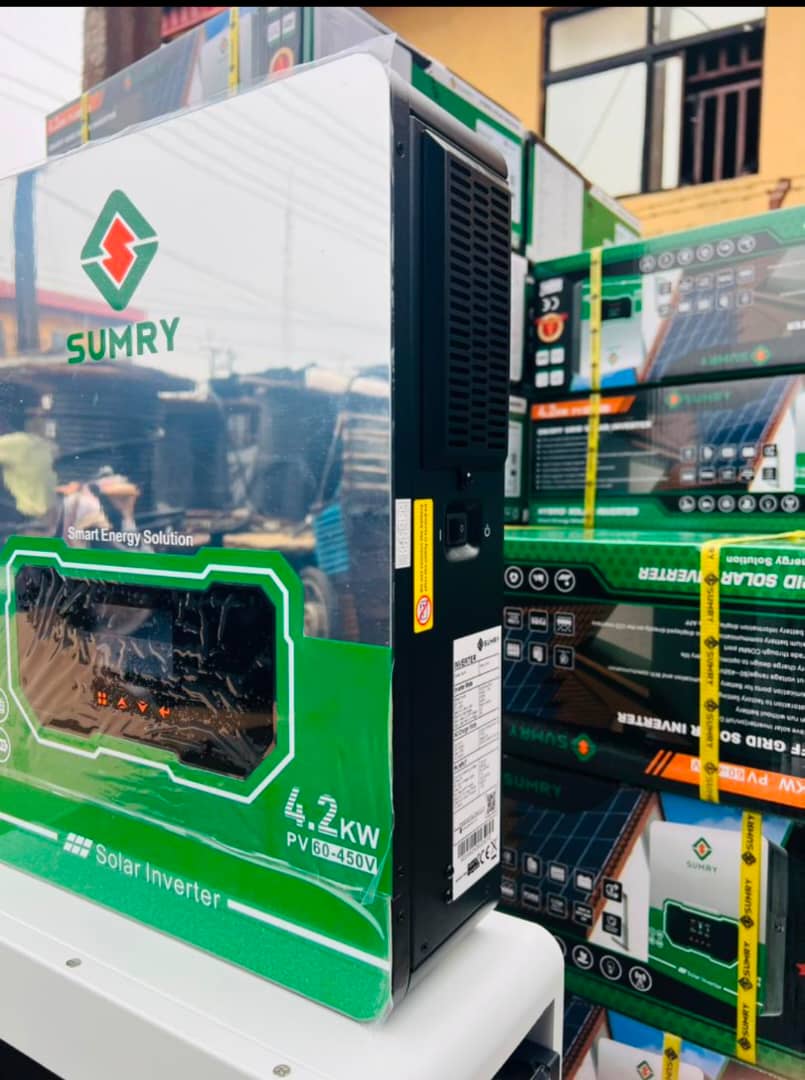
Inverter
An inverter is an electronic device that converts direct <a href="/">current (DC)</a> from a battery or solar panel into alternating current (AC) – the type of electricity used to power household appliances, office equipment, and industrial machinery. In Nigeria, where grid outages are frequent, an inverter paired with a reliable inverter battery forms the heart of any backup power system. Whether you need an inverter for home use, a business setup, or a large-scale industrial plant, understanding inverter types, prices, and selection criteria ensures you invest wisely.
How an Inverter Works
At its core, an inverter takes stored DC energy from batteries and transforms it into clean AC power through electronic switching circuits. When the national grid is available, a hybrid or on-grid inverter can also feed power back or charge batteries. During a blackout, the inverter instantly switches to battery mode, delivering uninterrupted electricity. This seamless transition makes inverters indispensable in Lagos, Abuja, Port Harcourt, and every Nigerian city where power stability is a daily challenge.
Types of Inverters Available at Power Solution Mall
We stock a full range of inverters tailored to every need. Understanding the differences helps you pick the right one.
Off-Grid Inverters – Work independently from the grid, ideal for rural areas or locations with zero NEPA supply. They solely rely on batteries and solar panels.
Hybrid Inverters – Combine grid-tied and off-grid functions. They manage solar charging, battery storage, and grid interaction, making them the most popular inverter type for modern Nigerian homes and businesses.
On-Grid (Grid-Tie) Inverters – Feed surplus solar energy directly to the grid. Suitable where net metering is available, though less common in Nigeria currently.
Pure Sine Wave Inverters – Deliver clean, utility-grade power that is safe for sensitive electronics like laptops, TVs, and medical equipment. Almost all our brands produce pure sine wave inverters.
Modified Sine Wave Inverters – Budget-friendly but not recommended for modern appliances as they can cause humming in fans or damage sensitive devices.
Top Inverter Brands and Models in Nigeria
We supply only genuine, warranty-backed inverters from world-class manufacturers. Our range includes Gospower, Hinen, Felicity, Cworth Energy, itel Energy (frequently searched online as Inverter Itel), Sako Power, SMK Solar, Growatt, TBB Power, Huawei, Deye, SRNE, Mercury, Blue Carbon, Firman, SMS Solar, Livoltek, Luxpower, Haisic, Megatank, AlpSolar, SOLIS, and Hisense. Each brand is vetted for reliability in the Nigerian climate, with local after-sales support.
Inverter Price in Nigeria – What to Expect
The inverter price in Nigeria varies widely based on capacity, type, and brand. While many people search “inverter price in Nigeria Jumia” to compare rates, buying directly from an authorised distributor like Power Solution Mall guarantees genuine products, full manufacturer warranty, and professional installation – benefits online marketplaces often lack.
Current price ranges (subject to exchange rate fluctuations and stock availability):
1kVA–1.5kVA pure sine wave inverters: starting around ₦65,000
2.5kVA–3.5kVA inverters for small homes/flats: ₦150,000–₦350,000
5kVA hybrid inverters for standard homes: ₦400,000–₦800,000
7.5kVA–10kVA inverters for large homes/offices: ₦900,000–₦1,800,000
Industrial 15kVA and above: priced according to project specifications
The inverter battery price also affects the total cost. A quality 200Ah deep-cycle battery adds ₦180,000–₦350,000 each, and a complete inverter for home typically requires at least two batteries.
Pricing Factors that Influence Inverter Cost in Nigeria
Capacity (VA Rating) – Higher VA equals higher price. Always oversize slightly to handle startup surges.
Waveform – Pure sine wave inverters cost more than modified sine wave but are mandatory for sensitive loads.
Brand and Build Quality – Premium brands like Deye, Huawei, and Growatt command a higher inverter price in Nigeria due to advanced features and durability.
Charge Controller Type – Inverters with built-in MPPT solar charge controllers are more expensive than those with PWM or no solar integration.
Warranty and Support – Authorised units backed by local service centers cost marginally more but save you from future headaches.
Import Duties and Dollar Exchange – The naira price fluctuates with forex, directly impacting the final inverter price in Nigeria.
Choosing the Right Inverter – A Nigerian Buyer’s Guide
Follow this step-by-step approach to select the best inverter for home or commercial use:
Calculate your total load – List all appliances you want to power simultaneously. Don’t forget startup surges for motors (e.g., water pump, fridge). This determines the inverter’s continuous and peak VA rating.
Decide on system voltage – Common configurations are 12V (small), 24V (medium), and 48V (large). Higher voltage reduces current and cable losses.
Select the right inverter battery – Deep-cycle tubular or lithium batteries are standard for home backup. The battery bank capacity (Ah) dictates how long your inverter runs.
Consider solar readiness – If you plan to add solar panels later, buy a hybrid inverter with built-in MPPT controller. It saves money compared to future upgrades.
Match brand reputation with support – Choosing an inverter from our stable means you’re covered with technical support in Lagos, Abuja, Ibadan, Kano, and nationwide.
Set a realistic budget – The cheapest inverter price in Nigeria might be tempting, but poor-quality units fail early and cost more in replacements.
Installation – Leave It to the Professionals
We strongly advise professional installation for safety and optimal performance. A typical residential installation includes:
Mounting the inverter on a cool, ventilated wall
Connecting cables of appropriate gauge to the battery bank
Wiring the changeover switch to segregate grid and inverter circuits
Proper earthing to prevent electrocution and equipment damage
Testing and user orientation
Our trained technicians provide expert installation anywhere in Nigeria, from Lagos to Port Harcourt, Benin, Enugu, Kaduna, and beyond. The cost of installation depends on proximity, complexity, and materials, and we’ll always provide a transparent quote before commencing work.
Maintenance Tips for Long Inverter Life
Keep the inverter in a dust-free, well-ventilated space. Overheating shortens component lifespan.
Check battery terminals monthly for corrosion and tighten connections.
Use the inverter regularly; long periods of inactivity can damage batteries.
Avoid overloading beyond the rated capacity; a consistently overloaded inverter will fail.
Schedule annual professional servicing to inspect internal connections, cooling fans, and firmware updates (for hybrid models).
Warranty Information
All inverters sold by Power Solution Mall carry the manufacturer’s warranty, typically ranging from one to five years depending on the brand and model. Brands like Huawei, Deye, and Growatt offer extended local warranty support. We facilitate all valid warranty claims through our service centers, giving you peace of mind.
Common Mistakes Buyers Make
Buying an inverter based solely on inverter price without confirming it’s pure sine wave
Undersizing the inverter, then overloading it with too many appliances
Using car batteries instead of deep-cycle inverter batteries, which fail within weeks
Installing the inverter in a confined space, causing overheating
Not factoring future expansion – a slightly larger hybrid inverter is cheaper than replacing the whole unit later
Purchasing from unauthorised sources; many faulty units sold online carry no warranty
Why Nigerians Trust Power Solution Mall for Inverters
Genuine Products – Every inverter we sell is sourced directly from manufacturers or their accredited distributors. No refurbished or counterfeit units.
Competitive Inverter Price in Nigeria – We offer the best value for money, often beating online marketplace listings when you factor in warranty, installation, and after-sales support.
Nationwide Delivery – We deliver inverters and inverter batteries to all 36 states, including Lagos, Abuja, Port Harcourt, Ibadan, Kano, Kaduna, Benin, Abeokuta, Jos, Enugu, Asaba, Warri, Onitsha, Owerri, Akure, Ilorin, Uyo, Calabar, and Aba.
Professional Installation – Our certified teams ensure your inverter is correctly sized, safely mounted, and optimally configured.
Bulk Purchase & Corporate Supply – We handle contract supply for government agencies, construction companies, schools, hospitals, hotels, and religious institutions. Special pricing available for bulk orders.
Wholesale Supply – Electrical dealers and installers can open a trade account to stock inverter brands like Felicity, Hinen, itel Energy, and Sako Power at wholesale prices.
Retail Sales – Even for a single inverter for home, you’ll receive expert guidance and the same commitment to quality.
Ongoing Technical Support – Our engineers are just a call away for troubleshooting, upgrades, and maintenance nationwide.
Get Your Inverter Today
Skip the guesswork and the risk of buying from unverified sources. When you check the inverter price in Nigeria Jumia, remember that genuine warranty, expert matching, and installation support matter. Power Solution Mall brings you the complete package: authentic products, sharp pricing, and end-to-end service. Browse our inverter category now, request a free consultation, and secure the power backup that meets your exact needs.
FAQs
How much is inverter price in Nigeria currently?
Prices start around ₦65,000 for small-capacity pure sine wave inverters and go up to ₦1,800,000 or more for high-capacity hybrid units. The exact inverter price in Nigeria depends on brand, capacity, and features.Which inverter is the best for home use in Nigeria?
A 2.5kVA or 3.5kVA pure sine wave hybrid inverter from Deye, Growatt, or Felicity is ideal for a typical home. It runs essential loads and can integrate with solar panels later.What is the difference between inverter battery and car battery?
Inverter batteries are deep-cycle tubular or lithium types designed to discharge slowly and deeply. Car batteries are starter batteries that deliver short bursts of power and fail quickly if used for inverters.How many batteries do I need for my inverter?
It depends on your inverter’s voltage and desired backup time. A 24V inverter needs two 12V batteries in series, a 48V inverter needs four. Capacity (Ah) determines how long the backup lasts.Can I buy a quality inverter for home at a cheap inverter price?
We offer competitive prices, but beware of prices that seem too low. Ultra-cheap inverters are often modified sine wave or poor-quality units without warranty. Power Solution Mall balances affordability with guaranteed quality.Do you match the inverter price in Nigeria Jumia?
Our pricing is highly competitive, and importantly, all our inverters come with full manufacturer warranty, installation support, and after-sales service—value that goes beyond a simple online listing.Where can I find a reliable inverter battery price list?
We provide an updated inverter battery price list on our website and through our sales team. Battery prices change with forex, so it’s best to request a current quote.How do I maintain my inverter battery?
Check electrolyte levels monthly (for flooded tubular batteries), keep terminals clean and tight, avoid deep discharges below 50%, and ensure the battery area is well-ventilated. Lithium batteries require minimal maintenance.How long does an inverter last?
A quality pure sine wave inverter can last 8–15 years with proper care. The inverter battery typically lasts 2–5 years for tubular and 8–10 years for lithium.What is the warranty on inverters from Power Solution Mall?
Warranty periods range from 1 to 5 years depending on the brand and model. We process all warranty claims directly with the manufacturer’s local service centers.Can the inverter run air conditioners and refrigerators?
Yes, provided the inverter is sized appropriately and uses pure sine wave output. Motor-based appliances have startup surges that require a higher VA rating.Do you install inverters in areas outside Lagos, like Port Harcourt or Enugu?
Absolutely. Our installation network covers all major Nigerian cities including Port Harcourt, Abuja, Ibadan, Benin, Asaba, Onitsha, Kano, Kaduna, and far beyond.What is the advantage of a hybrid inverter over a normal inverter?
A hybrid inverter manages solar charging, battery storage, and grid connection simultaneously. It lets you add solar panels at any time and potentially reduce electricity bills, unlike a standalone inverter that only charges from the grid.Can I run my entire house on an inverter?
Yes, if you correctly size a high-capacity inverter and a sufficient battery bank. Large homes typically require 5kVA and above. We can conduct a load audit to design the perfect system.Is Inverter Itel the same as itel mobile phones?
Inverter Itel refers to itel Energy, the power division of the same company, producing high-quality inverters and batteries. They are a separate product line focused on power solutions.
Categories
53Showing 1 to 12 of 121 products